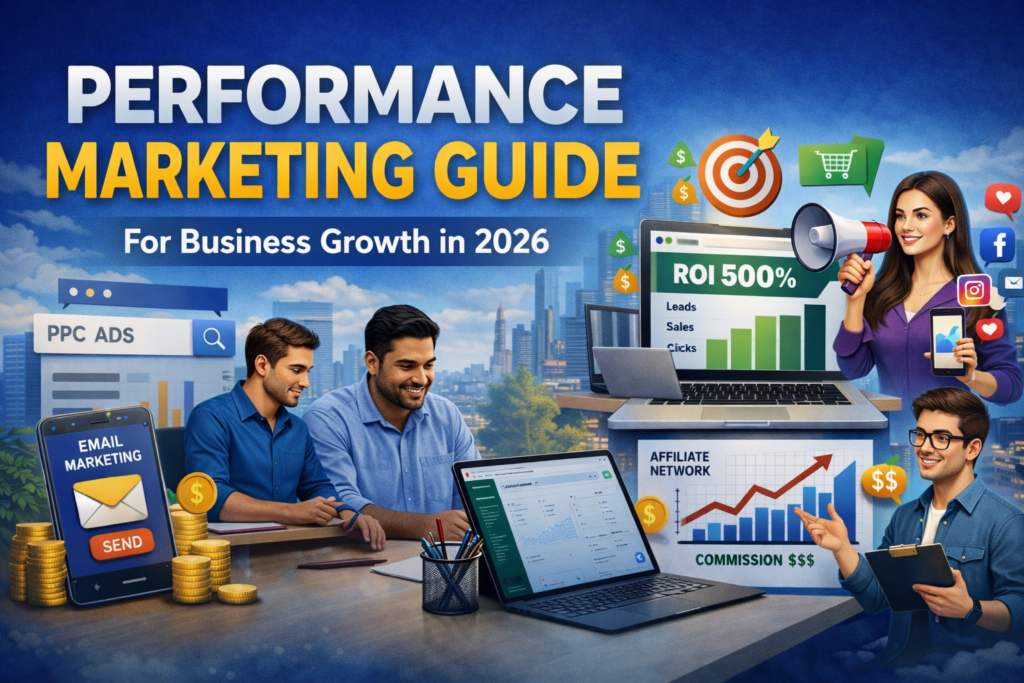
In today’s digital world, businesses want measurable results from every rupee they spend. This is where performance marketing becomes essential. It allows brands to pay only when a specific action is completed, such as a click, lead, or sale.
This result-driven approach makes performance marketerone of the most effective strategies for startups, small businesses, and growing brands.
💡 What is Performance Marketing?
Performance is a type of digital marketing where advertisers pay based on results instead of impressions. These results can include website visits, app downloads, or conversions.
Unlike traditional advertising, performance focuses entirely on measurable outcomes, making it easier to track success.
⚙️ How Performance Marketing Works
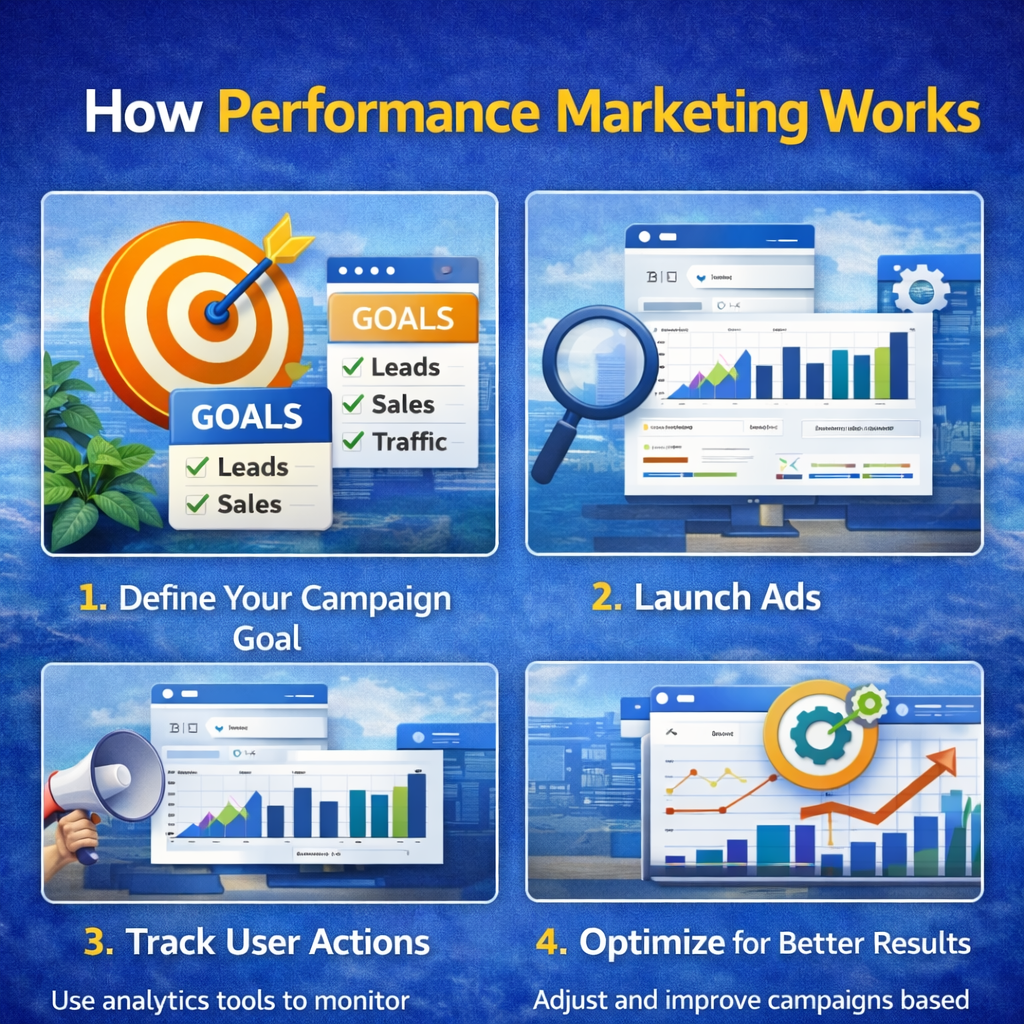
The process of performance is simple and data-driven:
- 🎯 Define your campaign goal (leads, sales, traffic)
- 📢 Launch ads on platforms like Google or social media
- 📊 Track user actions using analytics tools
- 🔄 Optimize campaigns for better performance
With performance businesses can quickly adjust strategies based on real-time data.
📊 Types of Performance Marketing Channels
🔍 Search Engine Marketing (PPC)
Paid ads on search engines where you pay per click.
📱 Social Media Advertising
Platforms like Facebook and Instagram help target the right audience.
🤝 Affiliate Marketing
Partners promote your product and earn commission on each sale.
📧 Email Marketing
Used to nurture leads and improve conversion rates.
🎥 Influencer Marketing
Creators promote products with trackable results using performance techniques.
🔥 Benefits of Performance Marketing
✅ Pay for Results
You only pay when a specific goal is achieved, making performance cost-efficient.
✅ High ROI
Since every action is tracked, performance delivers better return on investment.
✅ Real-Time Optimization
Campaigns can be improved instantly using live data.
✅ Targeted Reach
You can reach a highly specific audience based on interests, behavior, and location.
✅ Scalable Growth
Successful campaigns in performance market can be scaled easily for better results.
📈 How to Build a Performance Marketing Strategy
🎯 Set Clear Goals
Define whether you want leads, sales, or traffic.
👥 Understand Your Audience
Identify your ideal customer for better targeting.
📢 Choose the Right Platform
- Google Ads for intent-based traffic
- Facebook & Instagram for engagement
- LinkedIn for B2B marketing
🧪 Test and Experiment
A/B testing helps improve your marketing campaigns.
📊 Track and Optimize
Use tools like Google Analytics to monitor performance.
🆚 Performance Marketing vs Traditional Marketing
| Feature | Performance Marketing | Traditional Marketing |
|---|---|---|
| Cost Model | Pay for results | Fixed cost |
| Tracking | Real-time | Limited |
| ROI | High | Uncertain |
| Targeting | Advanced | Broad |
❓ FAQs
Q1. Is performance marketing good for small businesses?
Yes, performance is ideal for small businesses because it allows controlled spending and measurable results.
Q2. Which platform is best for beginners?
Google Ads and Facebook Ads are the most commonly used platforms.
Q3. How much budget is required?
You can start performance with a small daily budget and scale gradually.
Q4. Is SEO better than performance marketer ?
SEO is long-term, while performance delivers faster results.
🏁 Conclusion
If you want faster growth, measurable outcomes, and better ROI, performance is the right approach. It helps businesses scale efficiently while keeping control over budget and performance.