
Introduction
If you’ve spent any time online, you’ve probably noticed how often people trust recommendations from creators more than traditional ads. That shift is exactly why influencer marketing has become such a powerful strategy.
Instead of pushing your message through ads, you collaborate with people who already have an audience. The result? More trust, better engagement, and often higher conversions
What is Influencer Marketing?
Influencer marketing is a strategy where brands partner with individuals who have a loyal following on platforms like Instagram, YouTube, or TikTok.
These influencers promote products or services in a way that feels natural to their audience. Because the recommendation comes from someone they already follow, it doesn’t feel like a typical advertisement.
Why Influencer Marketing Works So Well
The biggest reason influencer works is trust.
People follow influencers for content, opinions, and recommendations. When an influencer shares a product, it feels more like advice than promotion.
Key benefits:
- Builds instant credibility
- Reaches a targeted audience
- Improves engagement rates
- Increases conversions organically
Types of Influencers You Can Work With
Not all influencers are the same. Choosing the right type is important for a successful influencer campaign.
- Nano Influencers (1K–10K followers)
High engagement, niche audience - Micro Influencers (10K–100K followers)
Best balance of reach and trust - Macro Influencers (100K–1M followers)
Good for brand awareness - Mega Influencers (1M+ followers)
Massive reach but lower personal connection
For most brands, micro influencers deliver the best results in influencer marketing.
How to Build a Successful Influencer Marketing Strategy
A strong influencer strategy is more than just paying someone to post.
Follow these steps:
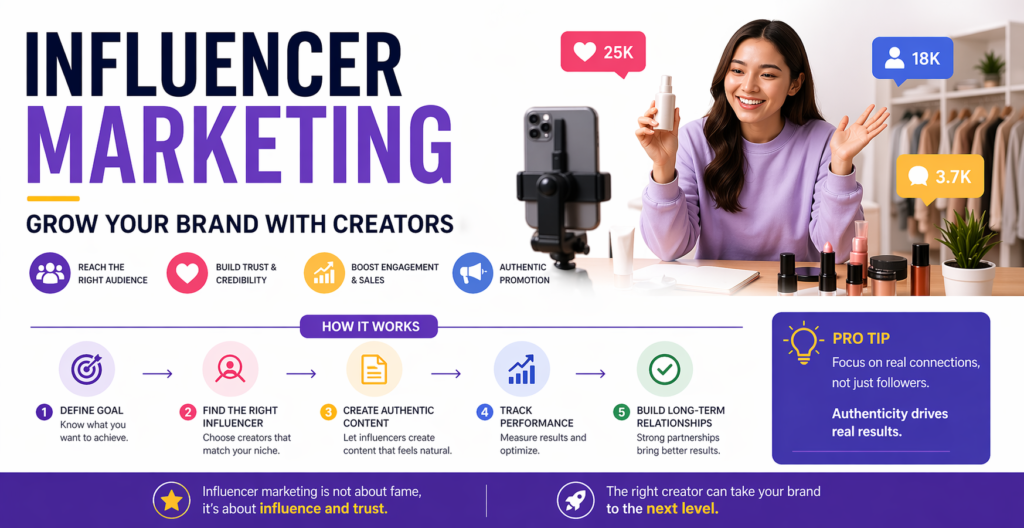
1. Define Your Goal
Decide whether you want awareness, traffic, or sales.
2. Choose the Right Influencer
Look for relevance, not just follower count.
3. Focus on Authentic Content
Let influencers create content in their own style. Forced scripts rarely work.
4. Track Performance
Measure clicks, engagement, and conversions to understand what’s working.
Common Mistakes to Avoid
Many brands fail at influencer marketing because they approach it like traditional advertising.
Avoid these mistakes:
- Choosing influencers only based on followers
- Ignoring audience relevance
- Over-controlling content
- Not tracking results
Future of Influencer Marketing
The future of influencer marketing is shifting towards authenticity and niche communities.
Short-form video, personal branding, and creator-led content are becoming more important. Brands that adapt to this trend will see better long-term results.
Conclusion
At its core, influencer is about connection.
When done right, it doesn’t feel like marketing at all — it feels like a recommendation from a trusted source. And that’s exactly why it works.
If you focus on the right influencers, authentic content, and clear goals, this strategy can become one of the most effective ways to grow your brand online.